Polo Shirt vs Dress Shirt: The Quick Framework
Think of dress codes on a spectrum. Place each shirt accordingly and you will rarely miss.
- Most formal: Suit and tie with a crisp dress shirt
- Business professional: Suit or blazer with dress shirt, often no tie
- Business casual: Smart trousers or chinos with a polo shirt or dress shirt, no tie
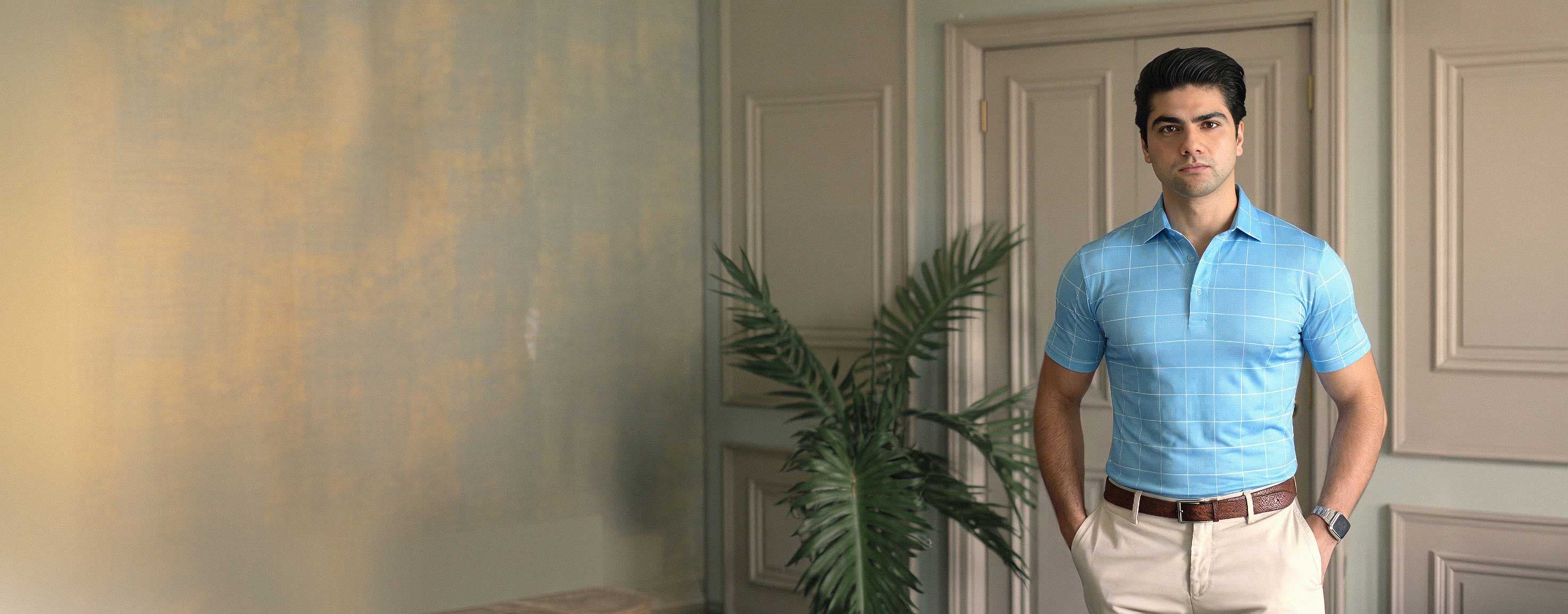
- Smart-casual: Polo shirt with elevated separates, sleek footwear
- Casual: Relaxed polo shirts or tees with denim or casual chinos
Key differences to guide your choice:
- Structure: Dress shirts offer sharper lines, collar height, and the option for a tie. Polos bring knit comfort with a softer drape.
- Collar: A structured collar dress shirt holds shape under a blazer. Choose polos with reinforced or structured collars to avoid curling.
- Fabric: Dress shirts use woven fabrics like poplin, twill, or oxford for a crisp look. Polo shirts use knits like pique or jersey for breathability and ease.
- Sleeves: Dress shirts have adjustable cuffs and precise sleeve length. Polos come in short or long sleeve, better for smart-casual.
- Tuck: Dress shirts are designed to tuck. Polos can be tucked or not, but the hem should sit mid-fly when untucked.
When to Wear a Black Polo Shirt
A black polo shirt is the quiet power move of smart-casual. It reads polished, slimming, and modern, especially with a structured collar.
Where it works best:
- Smart-casual offices that do not require a tie
- Client lunches in warm climates where a dress shirt may feel overdressed
- Travel days when you need comfort that still looks intentional
- Team offsites, networking events, and dinners where denim is acceptable
Pairing formulas:
- Black polo shirt + mid gray wool trousers + black loafers
- Black polo + tailored dark denim + suede Chelsea boots
- Black polo + tan chinos + white minimalist sneakers
- Black polo + olive chinos + black leather sneakers
- Add an unstructured navy blazer when you need to elevate quickly
Fit and finish tips:
- Ensure the collar stands cleanly under a jacket. Avoid floppy or curling collars.
- Sleeves should hug the upper arm lightly, not squeeze.
- If untucked, the hem should land mid-zip. Tucked looks sharper with trousers and a blazer.
Pro move:
- Choose structured collar polo shirts from Collars & Crown to keep the neckline crisp through long days, flights, and repeated washes.
When to Wear a White Polo Shirt
A white polo shirt brings a fresh, tailored look without formality. It is excellent for daytime business-casual, creative offices, and weekend-smart settings.
Pairing ideas:
- White polo shirt + navy chinos + brown loafers
- White polo + charcoal trousers + black derbies
- White polo + light wash jeans + retro court sneakers
Keep it bright:
- Wash on cold with like colors, avoid chlorine bleach that can yellow fibers, and air dry when possible.
- Opt for high-gauge knits or performance blends that resist transparency.
When to Choose a Dress Shirt
Reach for dress shirts when the stakes are higher or the setting is traditional.
Best scenarios:
- Job interviews, board meetings, and investor presentations
- Suit-required offices and formal client appointments
- Ceremonies and occasions where a tie is expected
- When you need a precise, pressed look under a blazer
Smart selections:
- White dress shirt: Always appropriate, the backbone of professional wardrobes.
- Light blue dress shirt: Softer than white, excellent for daily wear and interviews.
- Soft patterns or subtle textures: Fine stripes, micro checks, poplin, or twill add depth without noise.
- Collar styles: Spread or semi-spread for tailoring, button-down for relaxed business casual.
- Cuffs: Barrel cuffs for daily use, French cuffs for dressier events.
Black Dress Shirt: When It Works
A black dress shirt can be incredibly sharp when styled intentionally.
Wear it for:
- Evenings, dinners, creative-industry events, and smart-casual nights
- Monochrome looks with charcoal or black tailoring, no tie
- Elevated separates like black trousers with suede loafers
Avoid it for: